


|
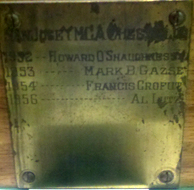
Home | Schedule | RSVP Form | Registration Form | History Over the years The San Francisco Bay Area is steeped in history – and the Kolty Chess Club is a very small, but interesting part of it. It all started in San Francisco where the first chess club in the United States was founded in the early 1850's. Originally meeting in a library, the club eventually found its home at the Mechanics Institute. Many members of the San Francisco group would play correspondence chess with players in San Jose. The popularity of chess in the U.S. grew tremendously when, in 1857, Paul Morphy won a prestigious New York tournament, to which no west coast players had been invited. Morphy took his game overseas and traveled through Europe from 1859-60, playing with the best players available, or at least those that would accept his challenge. He won a Championship along the way. Howard Staunton, one of the best players at the time, avoided a match with Morphy and much was written about that drama over the years. As Morphy's fame grew, so did the popularity of chess, leading to the San Jose Chess Club forming in the early 1900's. Their first meetings were in a library, but when that building burned down some time around 1906, they moved to a brick clock tower building built in the late 1800's – the oldest standing building in San Jose. Barry Curto went in the 1950's to watch the chess club and met many of its famous players: Howard O'Shaughnessy won the first tournament in 1952, Mark Gazes (the strongest player in 1953) won the San Jose YMCA Tournament; Francis Grofut was popular in 1954, and Al Lutz was a top player in 1956.
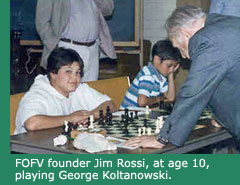
In the early 1950's the chess club moved to the San Jose YMCA. But the club clashed with the YMCA over what time they had to vacate the building. Many of their matches would extend beyond closing time and so they were ‘evicted'. The chess club moved into the San Jose Center for the Blind in 1972 and continued there until 1979, when they reformed as the Kolty Chess Club. George Koltanowski was born in 1903 in Belgium to parents who were diamond cutters. George became a blindfold chess expert and held the world record for playing 34 boards simultaneously without notes (on September 20, 1937). The feat took 13.5 hours and his record still stands. George settled in San Francisco in 1947 with his wife, Leah. He was elected President of the U.S. Chess Federation in 1974 and directed every U.S. Open from 1947 until the late 70's. He became the chess columnist for the San Francisco Chronicle, writing over 19,000 columns during his 52 years with the paper, until his death on February 5, 2000. Meanwhile, as Koltanowski manned the chess columns at the SF Chronicle, the San Jose Mercury sponsored their own column authored by Shelby Lyman. That column lasted from 1979-2002. Lyman frequently mentioned the Kolty Chess Club, drawing adults and children into the game. The Club became very popular, having over 100 members at one time. The Kolty Chess Club needed a permanent tournament director. George got Fred and Pat Mayntz to take over. They directed the Club for over a decade. The high rent finally forced them out of their building and they found a new home at the Campbell Library in the early 1980's. In the late 80's, because they needed more room, the Kolty Chess Club moved to the Campbell Community Center, where they have been ever since. Pat Mayntz always brought a personal touch into the Club by providing special holiday-themed treats. And Fred Mayntz would start each tournament with “Start your clocks. Some will lose – don't take it too hard”. When the Mayntzs left the Bay Area to run a chess club in Nevada, Neil Regan took over the Directorship with his wife. They operated the Club for about a year and then Flynn Penoyer became Director (this was about 1993). Barry Curto remained as an assistant and helped each Director come on board, subbing for them when they participated in tournaments. Flynn remained for about a year, followed by Mr. Smith, who also manned the helm for about a year.
Finally, in 1994, Fred Leffingwell took over as Director doing a wonderful job for Kolty Chess Club until retiring in 2014. Frisco Del Rosario was acting as assistant director while teaching, lecturing, and demonstrating games from 2003 - 2014. Mr. Del Rosario is also the author of The First Book of Morphy. Wolfgang Behm is the current Director with Mike Splane providing lectures prior tournaments beginning. More Name Dropping (and some story-telling) People who were influential or played at Kolty Chess Club:
|
|
© FOUNDATION OF FAMILY VALUES Supporting Families of all Political, Religious, Sexual Preference, Economic, and Racial Categories A 501(c)3 Tax-exempt Non-profit Organization |